
Am I in Perimenopause? A No-BS Symptom Checklist
Wondering if you're in perimenopause? Use this no-BS symptom checklist to spot patterns, know what else to rule out, and talk to your provider clearly.
Am I in Perimenopause? A No-BS Symptom Checklist
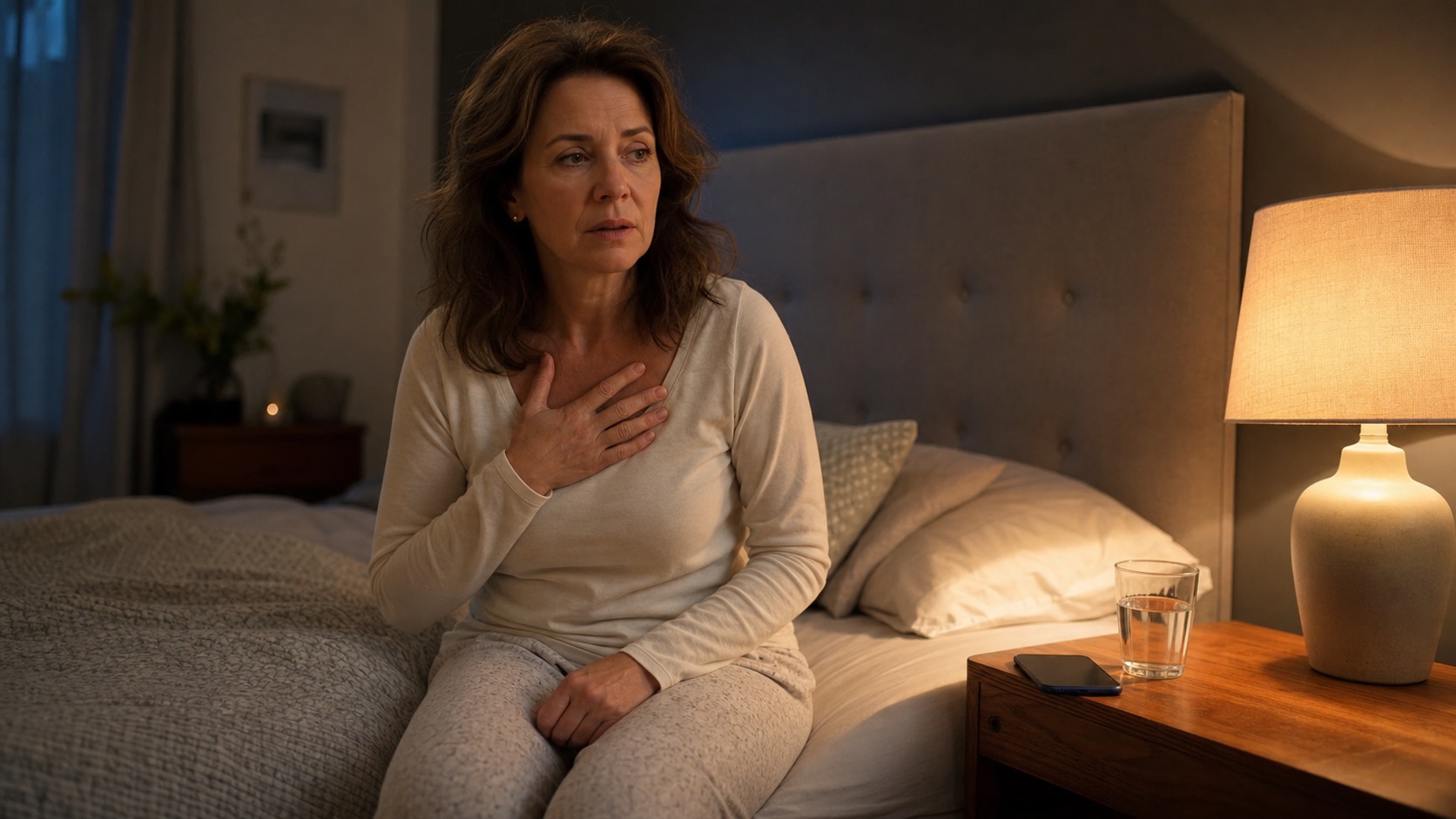
You woke up at 3:12 AM again.
Not because the dog barked. Not because a kid needed you. Not because you drank coffee too late, although now you’re blaming the coffee because blaming something feels better than staring at the ceiling wondering why your body has turned into a haunted thermostat with anxiety.
Maybe your periods are different. Maybe they’re not. Maybe you’re 41 and suddenly crying at pharmacy commercials. Maybe you’re 38 and your doctor told you you’re “too young.” Maybe you’re 47 and everyone keeps saying, “Well, that’s normal,” as if normal and miserable are the same thing.
So now you’re Googling: Am I in perimenopause?
Here’s the thing: perimenopause is often recognized by patterns, not one dramatic symptom. There is no tiny dashboard light that switches on and says, Welcome to the hormonal transition. Please collect your brain fog at baggage claim.
But there are clues.
This checklist will not diagnose you. I’m not a doctor, and an article on the internet is not medical care. What it can do is help you notice the pattern, bring better language to your provider, and stop treating every weird symptom like a personal failure.
You’re not imagining this. Let’s sort it out.
First: What Counts as Perimenopause?
Perimenopause is the transition leading up to menopause. Menopause itself is one day: the day you have gone 12 months without a period. Perimenopause is the messy lead-up, when hormones can fluctuate unevenly for years before your periods stop.
The average age of menopause in the U.S. is around 51, but perimenopause often starts in the 40s and can begin earlier. The Menopause Society notes that the transition can last several years, and major medical sources describe symptoms that may begin before periods stop completely.
That part matters.
You can still be having periods and be in perimenopause. You can still have “normal” lab results and be in perimenopause. You can still look completely fine from the outside while your internal operating system is throwing error messages in six different departments.
The No-BS Perimenopause Symptom Checklist
Do not use this like a pass-fail test. Use it like a pattern finder.
Check anything that feels new, worse, more frequent, or weirdly different for you, especially if several changes started in the same season of life.
Period and Cycle Changes
- Your cycles are shorter than they used to be
- Your cycles are longer than they used to be
- Your period shows up early, late, or with no respect for your calendar
- Bleeding is heavier than usual
- Bleeding is lighter than usual
- PMS is suddenly much worse
- Cramps, breast tenderness, or migraines have changed
- You skip a period, then get one that acts like it has been saving up resentment
Cycle changes are one of the classic clues, but they are not required at the beginning. Some women have mood, sleep, or body changes before their periods become obviously irregular.
And yes, that is deeply inconvenient.
Temperature and Sleep Changes
- Night sweats
- Hot flashes
- Waking between 2 AM and 4 AM for no obvious reason
- Trouble falling back asleep
- Feeling hot, then cold, then hot again
- More vivid dreams or restless sleep
- Waking with your heart pounding
- Feeling exhausted even after enough hours in bed
If night sweats are one of your big clues, I wrote a deeper guide to perimenopause night sweats. They are not just “being warm.” They can wreck sleep, mood, patience, and your ability to function like a person who remembers where she put her keys.
Mood, Brain, and Nervous System Changes
- Anxiety that feels new or louder than before
- Irritability or rage that seems disproportionate
- Crying more easily
- Depression or emotional flatness
- Brain fog
- Word-finding problems
- Forgetfulness that makes you nervous
- Feeling overstimulated by noise, people, or normal life
- Panic-like symptoms, especially if they show up out of nowhere
This is the category that scares women most.
Hot flashes are annoying. But the moment you forget a word mid-sentence, snap at someone you love, or feel dread sitting in your chest for no clear reason, you start wondering if something is seriously wrong with you.
Let me be clear: mental health symptoms still deserve real care. Perimenopause can overlap with anxiety, depression, ADHD, thyroid issues, stress, trauma, medication effects, and a dozen other things. Do not let anyone wave them away as “just hormones.”
But also? Do not let anyone pretend hormones cannot affect your brain. Estrogen and progesterone interact with sleep, serotonin, temperature regulation, and the stress response. When they fluctuate, your brain may notice.
Body Changes That Feel Random
- Sudden belly bloating
- Weight gain or body composition changes
- Joint aches
- Headaches or migraines
- Heart palpitations
- Dizziness or lightheadedness
- Itchy skin
- Dry eyes or dry mouth
- More urinary urgency
- Vaginal dryness or discomfort with sex
- Lower libido
- Hair shedding or texture changes
- New body odor changes
Fun little midlife surprise: perimenopause is not limited to reproductive organs. Hormone receptors exist all over the body, which is why the symptom list can look like someone dumped a junk drawer onto the floor.
That does not mean every symptom is perimenopause. It means perimenopause belongs in the conversation, especially when several changes arrive together.
If bloating is part of your pattern, start with this guide to perimenopause bloating. It covers what can be hormonal, what to track, and when bloating needs prompt medical attention.
The Pattern Test: When the Checklist Starts to Matter
One symptom by itself may not tell you much.
Three or four changes that started around the same time? That is more useful.
Ask yourself:
- Did these symptoms begin or worsen in my late 30s, 40s, or early 50s?
- Are my periods, PMS, sleep, mood, or temperature regulation different than they used to be?
- Do symptoms cluster around certain points in my cycle?
- Have I been told my labs are normal even though I feel clearly different?
- Do I keep blaming stress, aging, caffeine, parenting, work, or “not trying hard enough,” but the story still does not add up?
If you are nodding at that last one, hi. Welcome. Pull up a chair.
This is where many women get stuck. They do not have a single obvious symptom. They have a pile of “little” things that make life feel unfamiliar. Worse sleep. Shorter fuse. Heavier period. More anxiety. Weird bloating. Brain fog. A body that suddenly requires a full operations meeting before leaving the house.
That pattern is worth taking seriously.
What Else Should You Rule Out?
Perimenopause can explain a lot. It should not become a junk drawer for everything.
Talk with a healthcare provider, especially if symptoms are new, severe, persistent, worsening, or affecting your daily life. Depending on your symptoms and history, your clinician may want to consider things like:
- Thyroid problems
- Iron deficiency or anemia, especially with heavy bleeding
- Pregnancy, if pregnancy is possible
- Medication side effects
- Anxiety, depression, ADHD, or other mental health conditions
- Sleep apnea
- Diabetes or blood sugar issues
- Autoimmune conditions
- Fibroids, polyps, or other causes of abnormal bleeding
- Gastrointestinal or gynecologic causes of persistent bloating
And please do not ignore red flags.
Get prompt medical care for very heavy bleeding, bleeding after menopause, chest pain, fainting, severe pelvic or abdominal pain, sudden neurological symptoms, unexplained weight loss, persistent bloating that does not come and go, or any symptom that feels severe or frightening.
That is not me trying to scare you. It is me refusing to let “probably hormones” become another way women get dismissed.
Do You Need a Blood Test?
Maybe. Maybe not in the way you think.
Hormone testing in perimenopause is tricky because levels can swing from day to day. A single follicle-stimulating hormone (FSH) result may not prove much if you are still having periods. Major medical sources, including ACOG and Mayo Clinic, describe perimenopause diagnosis as primarily based on symptoms, age, menstrual history, and ruling out other causes.
In plain English: your story matters.
Labs can still be useful. Your provider may check thyroid function, iron levels, pregnancy, metabolic markers, or other tests based on your symptoms. But if one hormone panel came back “normal,” that does not automatically mean your symptoms are imaginary.
Normal labs are not a personality test.
What to Track Before Your Appointment
You do not need to become a full-time symptom accountant. Two to four weeks of notes can help.
Track:
- Period start dates and cycle length
- Flow changes: heavier, lighter, clots, spotting
- Sleep: wakeups, night sweats, early morning anxiety
- Mood: anxiety, rage, depression, tearfulness
- Brain fog or memory issues
- Hot flashes or temperature swings
- Bloating, digestion, urinary changes, or vaginal symptoms
- Anything that feels new, severe, or disruptive
Then bring a short summary, not a novel. Something like:
“I’m 43. Over the last six months my cycles shortened from 28 days to 23 to 25 days, my PMS is much worse, I’m waking at 3 AM several nights a week, and I’ve had new anxiety and brain fog. Could this be perimenopause, and what else should we rule out?”
That is clear. It is specific. It gives your provider something useful to work with.

Questions to Ask Your Provider
If you suspect perimenopause, you can say that out loud. You are not being pushy. You are participating in your own care.
Try:
- “Could these symptoms fit perimenopause, even if my periods are still coming?”
- “What else should we rule out based on my symptoms?”
- “Are there red flags that would make this urgent?”
- “If hormone tests are normal, how would you evaluate this clinically?”
- “What treatment or management options can we discuss if this is perimenopause?”
- “Would it make sense to see a menopause-informed gynecologist or specialist?”
If you are under 40 and having skipped periods, hot flashes, night sweats, or other significant cycle changes, be especially direct. Earlier symptoms deserve thoughtful evaluation, not a shrug.
You may also find the early-age guide helpful: Perimenopause at 39: Yes, It Can Start This Early.
So… Am I in Perimenopause?
Maybe.
If you are in your late 30s, 40s, or early 50s and you are seeing a pattern of cycle changes, sleep disruption, temperature swings, mood changes, brain fog, body changes, or symptoms that cluster around your cycle, perimenopause is a reasonable possibility to discuss with a provider.
Not a self-diagnosis. A possibility.
That distinction matters. You deserve validation, and you deserve medical care that does not stop at validation. You deserve someone who can say, “Yes, hormones may be involved, and let’s make sure we are not missing anything else.”
That is the standard.
If you want the bigger map, Not Crazy, Just Hormones walks through the symptom patterns, the science, and the doctor scripts in more depth. You can also grab the free symptom tracker if you want a simple place to start tracking.
You’re not broken.
You’re not being dramatic.
Your body is giving you information. Now you have better language for it.
Want the bigger symptom map?
Not Crazy, Just Hormones covers the symptoms, the science, and the provider scripts women need when their bodies start changing and nobody bothered to hand them a manual.
The information in this post is for educational purposes only and is not intended as medical advice. Always consult with a qualified healthcare provider about symptoms, diagnosis, and treatment decisions. Evelyn Cale is not a medical professional.
References
- ACOG. “The Menopause Years.” https://www.acog.org/womens-health/faqs/the-menopause-years
- Mayo Clinic. “Perimenopause - Symptoms and causes.” https://www.mayoclinic.org/diseases-conditions/perimenopause/symptoms-causes/syc-20354666
- The Menopause Society. “Menopause 101: A Primer for the Perimenopausal.” https://menopause.org/patient-education/menopause-topics/menopause-101-a-primer-for-the-perimenopausal
- Harlow, S. D., et al. (2012). “Executive summary of the Stages of Reproductive Aging Workshop + 10.” The Journal of Clinical Endocrinology & Metabolism, 97(4), 1159-1168. https://doi.org/10.1210/jc.2011-3362
- Cleveland Clinic. “29 Perimenopause Symptoms You May Not Know About.” https://health.clevelandclinic.org/weird-symptoms-of-low-estrogen